Bhutan-India Amity Draws Chinese Scholar’s Alarm, Fears Impact on Tibet-Border Negotiations
New Delhi/Beijing – March 30, 2024
The recent surge in warmth between India and Bhutan has stirred apprehensions in Chinese diplomatic circles, with concerns raised over its potential impact on the longstanding border dispute between China and Bhutan, particularly concerning the strategically significant Tibet-border region.
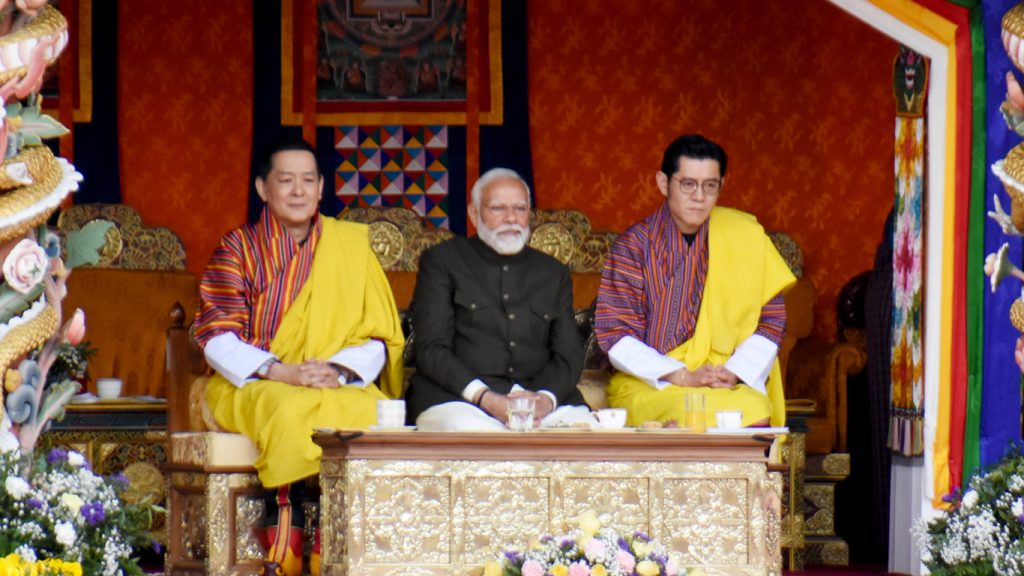
Indian Prime Minister Narendra Modi’s visit to Bhutan last week underscored a deepening partnership between the two nations, beyond mere geopolitical interests. Modi’s visit, characterized by significant gestures of goodwill, including an increase in Five-Year Plan assistance to over $1 billion, a private dinner hosted by King Jigme Khesar Namgyel Wangchuck, and the prestigious Order of the Druk Gyalpo conferred upon him, demonstrated the depth of the bilateral relationship.
This visit followed talks held in Delhi just a week prior between Bhutan’s newly elected Prime Minister Tshering Tobgay and top Indian leadership, indicating a concerted effort to solidify ties at a crucial juncture.
While Tobgay’s predecessor, Lotay Tshering, had expressed optimism regarding the resolution of the Tibet-border dispute with China, recent developments have raised doubts in New Delhi. Tshering had hinted at an imminent resolution in the next few rounds of talks, a prospect that unsettled Indian policymakers wary of potential compromises detrimental to India’s security interests.
Lin Minwang, deputy director of the Centre for South Asian Studies at Fudan University in Shanghai, highlighted the potential ramifications of the burgeoning India-Bhutan camaraderie on border negotiations. Lin’s remarks, citing momentum in negotiations since 2020, underscored the sensitivity of the issue.
Despite the lack of transparency regarding the progress of border talks, Bhutan’s former Prime Minister Lotay Tshering had hinted at advancements in negotiations, including proposals for a land swap involving the Doklam area, a move that Bhutan insisted should involve India as a stakeholder.
China’s historical proposals for a “package deal” to trade disputed territories for Bhutan-controlled areas have faced resistance, with Bhutan emphasizing the need for India’s involvement in any negotiations.
Lin’s assessment of the territorial dispute reflects China’s strategic interests, emphasizing Bhutan’s resolve to resolve disputes independently of Indian influence.
India’s apprehensions over potential land swaps, particularly in the Doklam plateau, stem from concerns over the strategic vulnerability it would pose to the Siliguri Corridor, a critical land link connecting northeastern states to the mainland.
While Bhutan has reaffirmed its alignment with India’s interests, concerns persist in India over Bhutan’s autonomy in negotiations without Delhi’s backing, a sentiment echoed during Lotay Tshering’s tenure.
As India-China relations remain strained since the 2020 border clashes, China’s overtures to neighboring South Asian nations have added complexity to the regional dynamics, raising questions about India’s influence in its immediate neighborhood.
The evolving landscape in the Himalayan region underscores the delicate balance of power and interests among regional stakeholders, with implications extending beyond bilateral relations to broader geopolitical dynamics in South Asia.
***