Bangladesh Ministry’s Anti-Government Order Sparks Backlash
Critics call the directive a threat to free speech and the legacy of last year’s revolution.
A controversial directive from Bangladesh’s Education Ministry instructing officials to monitor and report anti-government activities among students and institutions has drawn sharp criticism. Legal experts and activists claim the move undermines the democratic principles established after last year’s student-led revolution, which ended the 15-year rule of Sheikh Hasina. The interim government, led by Nobel laureate Muhammad Yunus, has since revoked the order following widespread condemnation.
Directive Draws Ire
On January 2, 2025, the Ministry of Education issued an order, signed by Abed Nomani, director of the Secondary Education Monitoring and Evaluation department, instructing officials to remain “vigilant and proactive” against students engaged in “provocative activities.” The directive urged authorities to report institutions or students involved in actions deemed harmful to the government or the country, although it failed to define such actions.
The order gained attention after circulating on social media and in local newspapers, triggering widespread criticism. Legal experts and activists argue it infringes on constitutional freedoms, particularly those that were central to the historic mass uprising of 2024.
Revolution’s Spirit Under Threat
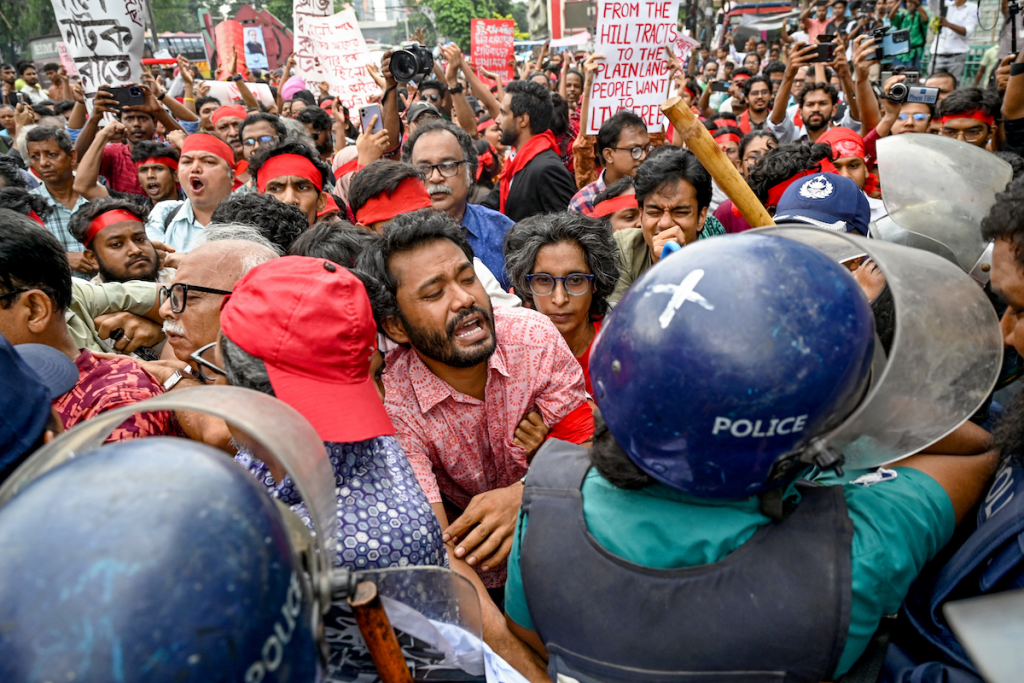
Last year’s protests, spearheaded by students, led to the ousting of Sheikh Hasina’s government on August 5, 2024, after a months-long campaign against autocracy and the suppression of free speech. The demonstrations resulted in over 800 deaths but ultimately paved the way for a transitional government led by Muhammad Yunus.
Supreme Court lawyer Snehadri Chakravarty condemned the new directive, calling it a betrayal of the revolution’s principles. “Student-led protests toppled the former prime minister precisely because freedoms like speech and expression were being curtailed. Within five months, we see similar authoritarian tendencies emerging,” Chakravarty told AFP.
He added, “This notification is antithetical to the sacrifices made during the mass uprising, which claimed so many lives.”
Government Responds Amid Criticism
Education Minister Wahiduddin Mahmud denied prior knowledge of the order and swiftly cancelled it on January 22, following mounting public outrage. “The Directorate of Secondary and Higher Education was not instructed to issue any such notification,” Mahmud clarified, promising a thorough investigation into the matter.
Nomani, the official who signed the directive, stated he was merely following instructions from higher-ranking officials. However, critics remain skeptical, viewing the incident as indicative of internal divisions within the interim government.
Analysis: A Delicate Transition
Bangladesh’s interim government faces a critical test as it balances restoring democratic values with maintaining stability. The backlash against the education ministry’s directive underscores the lingering sensitivities surrounding free speech and government oversight in post-revolution Bangladesh.
Observers warn that any action perceived as authoritarian could erode public trust in the transitional leadership and risk reigniting unrest. The swift withdrawal of the directive, however, signals a commitment to uphold the democratic ideals for which many fought and died.
The revocation of the controversial order is a reminder of the delicate path Bangladesh must navigate during its transitional phase. Upholding the freedoms won through sacrifice will require vigilance and accountability from those in power. As the nation rebuilds, honoring the spirit of the revolution remains paramount.
***