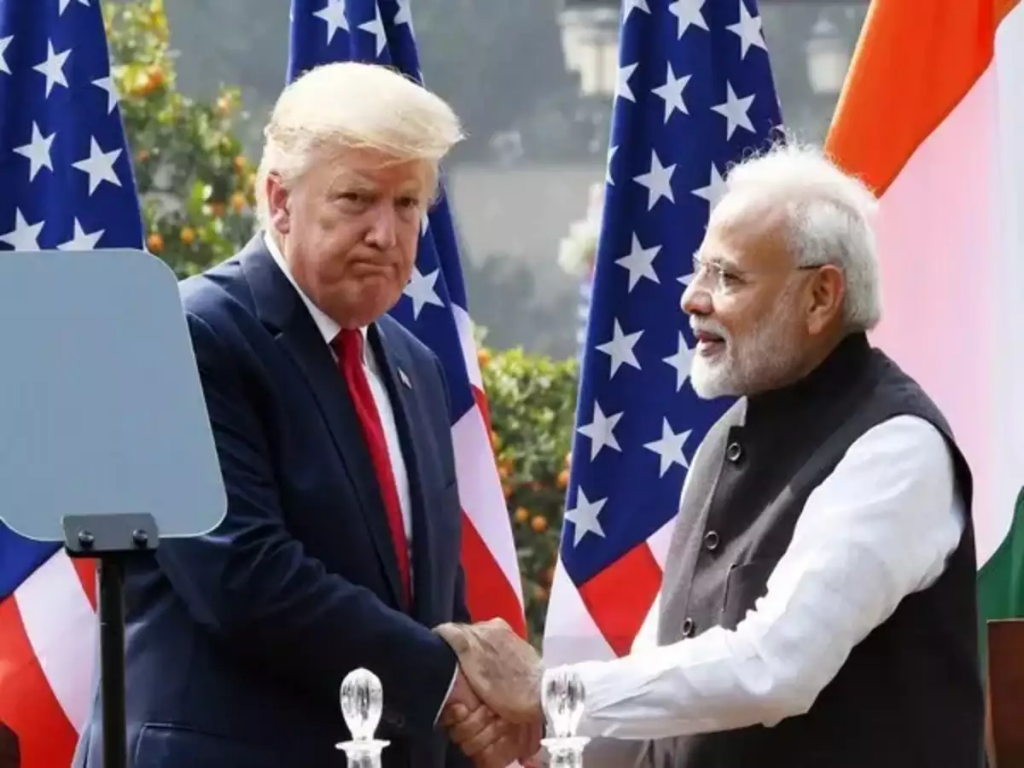
Donald Trump’s Return to Power: Implications for India
Challenges, Opportunities, and Strategic Realignments
Donald Trump’s potential return to the White House could significantly impact US-India relations, influencing trade, defense cooperation, and geopolitical strategy. While some areas may see strengthened ties, others could face new challenges. Here’s an analysis of how a second Trump presidency could shape India’s strategic interests.
Strengthening Strategic Ties in the Indo-Pacific
During Trump’s first term, India and the US deepened their defense and security cooperation, particularly through the Quadrilateral Security Dialogue (Quad), involving India, the US, Japan, and Australia. His administration also renamed the US Pacific Command to the Indo-Pacific Command, signaling a commitment to countering China’s growing influence.
If re-elected, Trump is expected to maintain or even intensify US-India collaboration in the Indo-Pacific, reinforcing India’s role in regional security. His previous alignment with Prime Minister Narendra Modi’s nationalist policies suggests continued diplomatic synergy between the two leaders.
Trade and Economic Frictions
Bilateral trade between India and the US grew under Trump, but his “America First” approach led to tensions. India lost its benefits under the Generalized System of Preferences (GSP) due to market access issues, and tariffs on Indian goods increased.
A second Trump term could mean renewed trade disputes, especially over tariffs and regulatory barriers. However, with the US looking to diversify supply chains away from China, India has an opportunity to position itself as a preferred partner. Strategic negotiations on trade and investment could benefit both nations if managed effectively.
Defense and Technology Cooperation
Trump’s presidency saw a rise in US-India defense trade, with major deals for Apache helicopters and advanced missile systems. His transactional approach to foreign policy, however, may require India to make higher financial commitments for access to cutting-edge technology.
While India has sought greater defense autonomy, a renewed Trump administration may present opportunities for co-development of military technologies and deeper intelligence-sharing agreements.
Immigration and Visa Policies
Trump’s strict immigration policies, particularly on H-1B visas, negatively impacted Indian professionals and IT firms. A return to office could mean stricter visa norms, potentially affecting India’s skilled workforce in the US.
However, India could negotiate for policy adjustments to safeguard its talent pipeline and business interests, especially in the technology and services sectors, which are crucial to both economies.
Geopolitical Uncertainty and Strategic Balancing
Trump’s “America First” stance led to a reduction in US engagement in global institutions, creating uncertainties in international diplomacy. For India, this could mean:
- Opportunities: With the US withdrawing from certain multilateral engagements, India could take a leadership role in global governance.
- Challenges: A potential US-China rapprochement under Trump could alter regional dynamics, requiring India to recalibrate its strategic posture.
A Pragmatic Approach for India
Donald Trump’s return to power presents both opportunities and risks for India. Strengthened defense ties and strategic cooperation in the Indo-Pacific are likely, but economic and immigration-related challenges may emerge.
India’s approach must be pragmatic, leveraging shared interests while maintaining its strategic autonomy. Navigating these complexities will be key in shaping a mutually beneficial US-India relationship in a potential second Trump term.
***