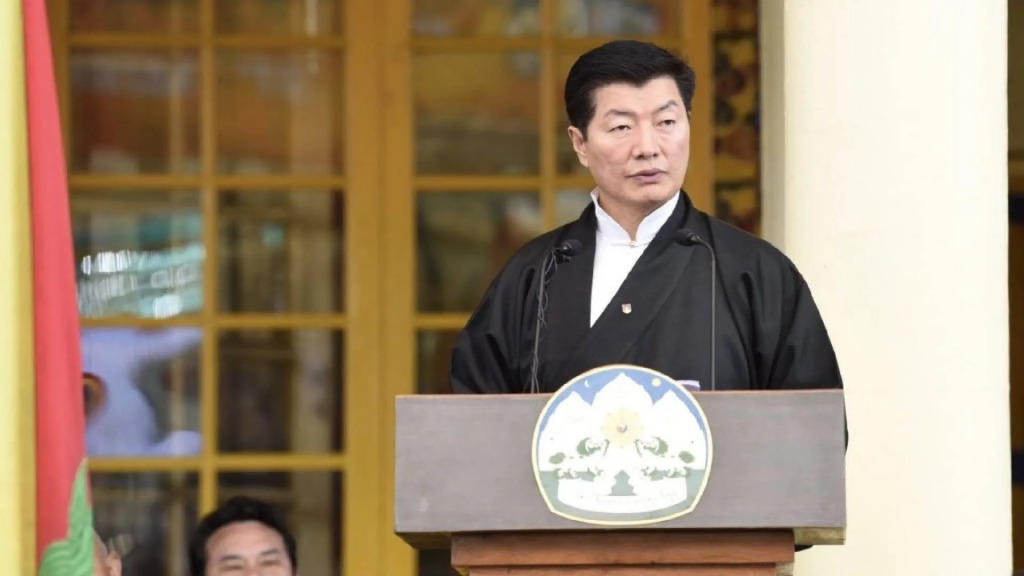
Tibetan President-in-Exile Concludes Northeast Visit, Criticizes China’s Policies
Siliguri, West Bengal, February 1, 2025: Sikyong Penpa Tsering, the President of the Tibetan Government-in-Exile, has concluded his official visit to Tibetan settlements in West Bengal. His visit, which included stops at key monasteries and governmental offices, was marked by a strong critique of China’s governance, touching upon Tibet’s political status, cultural preservation, and Beijing’s internal challenges.
During his engagements, Sikyong visited the Druk Sangag Choling Monastery, Sakya Guru Monastery, Phuntsok Ngayab Choeling Monastery, and Samdrup Darjay Choling Monastery. His final address at the Sonada Tashiling Tibetan settlement emphasized Tibet’s historical independence, the enduring legacy of His Holiness the Dalai Lama, and efforts to sustain Tibetan settlements in exile.
China’s Political Instability and Authoritarianism
Sikyong highlighted increasing instability within the Chinese Communist Party (CCP), arguing that President Xi Jinping’s leadership has created an atmosphere of fear. He pointed to the anti-corruption campaign as a means of purging rivals, leading to insecurity among party officials. “Loyalty to Xi is now the key to survival. Any deviation from his directives can result in imprisonment or disgrace,” he noted. This, he argued, weakens China’s political structure and has broader implications for international relations.
Economic Struggles and the “Lay-Flat” Movement
Beyond politics, Sikyong spoke on China’s economic downturn, citing declining consumer demand, an aging workforce, and the aftermath of the zero-COVID policies. He referenced the phenomenon of “ghost towns,” abandoned urban developments that reflect failures in China’s real estate sector.
He also touched upon the rise of the “lay-flat” movement among Chinese youth, where young people are rejecting traditional employment due to economic instability. Many now rely on financial support from their families rather than pursuing traditional careers. This trend, he stated, signifies deeper structural issues in China’s labor market.
Tibet’s Status and China’s Demographic Crisis
Sikyong firmly rejected Beijing’s “One China” policy, reiterating Tibet’s historical independence. He also addressed China’s demographic crisis, a consequence of its former One-Child Policy. “With a declining birth rate and a growing elderly population, China faces a shrinking workforce and economic slowdown,” he said. Additionally, he highlighted the gender imbalance caused by cultural preferences for sons, warning of long-term social challenges.
A Call for Continued Resistance
After his engagements in Sonada, Sikyong traveled to Salugara, visiting the Ewam India Buddhist Monastery and the Tibetan Mentseekhang branch before departing. His statements underscored Tibet’s continued resistance to Chinese policies, positioning Tibet’s struggle within the broader geopolitical context of China’s internal turmoil.
His visit reinforced the Tibetan community’s resilience and determination to preserve their identity despite China’s efforts to assert control. As Beijing faces economic and political challenges, Tibet’s struggle for autonomy remains a key issue in the region’s evolving geopolitical landscape.
***