US to Deport Nearly 600 Indian Migrants Amid Concerns Over Mistreatment
New Delhi, February 8, 2025 – Diplomatic tensions between India and the United States have escalated as Washington prepares to deport nearly 600 Indian migrants, prompting concerns over their treatment during repatriation. The issue gained urgency after images surfaced of deportees in shackles, raising questions about human rights violations.
In response, Indian authorities have formally raised concerns with their US counterparts, urging a more humane approach in handling deportations.
The Scale of Deportations
According to official sources, the US government has issued final removal orders for 487 individuals identified as Indian nationals. Additionally, 203 migrants were recently detained, primarily along the US-Mexico border.
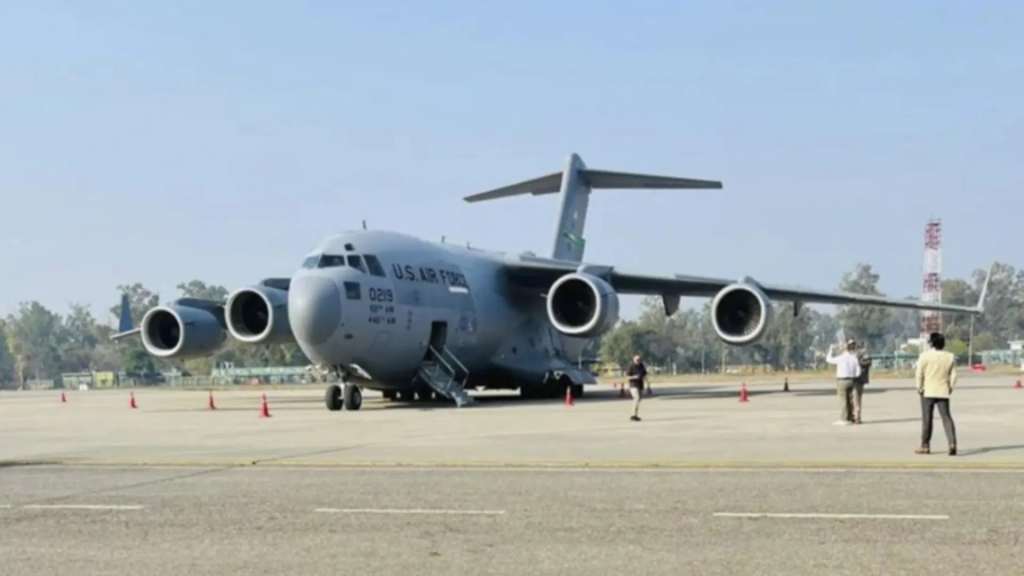
So far, 104 of them have already been repatriated to India on a US Air Force C-17 military aircraft, which landed in Amritsar on February 7.
Among the remaining detainees, Indian authorities have confirmed the nationality of 96 more individuals, paving the way for their imminent deportation. With these numbers, the total count of Indians slated for removal from the US has reached 586.
India’s Diplomatic Response
Foreign Secretary Vikram Misri, in a media briefing, acknowledged that the US had officially informed India about the removal orders and provided details on 298 individuals.
“We have received this information recently and are in the process of verifying the particulars. We will respond to our US counterparts accordingly,” Misri stated.
However, India has raised strong objections over reports of shackling and mistreatment of deportees. Misri emphasized that while deportations are part of sovereign immigration policies, inhumane treatment is unacceptable.
“This is a valid issue to raise, and we continue to emphasize that deportees should not be subjected to mistreatment,” he added.
Shackling Controversy Sparks Political Uproar
Concerns have intensified following reports that even women deportees were restrained during the latest repatriation flight.
In Parliament, External Affairs Minister S. Jaishankar defended US Immigration and Customs Enforcement (ICE) procedures, stating that according to US authorities, women and children are not shackled. However, multiple deportees have contradicted this claim, stating they were bound for the entire 40-hour flight and faced difficulties accessing restrooms.
The issue has sparked a political firestorm, with opposition parties—including Congress, Trinamool Congress, and Samajwadi Party—staging protests in Lok Sabha. Furious opposition MPs disrupted proceedings, demanding that the Modi government ensure the humane treatment of Indian citizens abroad. The uproar forced an adjournment of the session as protests intensified.
Legal and Procedural Aspects of Deportations
Misri clarified that ICE’s deportation protocols, including the use of restraints, have been in place since 2012. He noted that India had never previously objected to these procedures, but acknowledged that the latest controversy had reignited discussions on whether such measures were justified.
He also dismissed speculation about changes in India’s clearance process for deportation flights, explaining that the US classified the recent repatriation as a “national security operation,” which likely led to the use of a military aircraft instead of a civilian chartered plane.
The Larger Issue: Human Trafficking and Illegal Migration
Beyond the immediate concerns surrounding deportations, Indian authorities have highlighted a broader issue—the rise of human trafficking networks that exploit vulnerable migrants.
Misri described these illegal immigration syndicates as the “real cancer”, blaming criminal networks for misleading innocent individuals and charging huge sums to traffic them across borders.
“These networks deceive people, promising them legal entry, but they end up in detention. Tackling illegal migration requires a systemic crackdown on these criminal elements,” he stated.
Looking Ahead: The Future of US-India Cooperation on Immigration
With more deportation flights expected in the coming weeks, India is likely to intensify diplomatic discussions with the US to ensure more humane treatment of deportees.
The controversy has also highlighted the need for stronger bilateral cooperation to combat illegal migration and dismantle human trafficking networks.
While India remains committed to verifying the nationality of deportees before accepting them, the diplomatic fallout over their treatment on repatriation flights underscores the complexity of immigration enforcement.
The coming weeks will be critical in determining how both nations navigate this sensitive issue while balancing legal frameworks, human rights, and international relations.
***