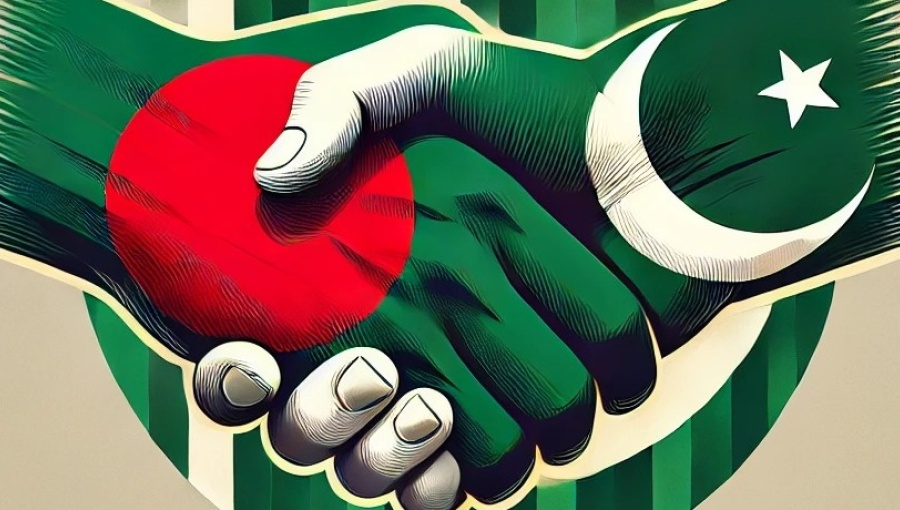
Bangladesh-Pakistan Trade Relations Strengthen Amid India’s Concerns
Bangladesh’s growing economic ties with Pakistan have sparked discussions about regional stability, even as officials emphasize that trade with India remains dominant. Former Bangladesh Deputy High Commissioner to India, Mashfee Binte Shams, assured that despite improving relations with Islamabad, Bangladesh’s economic and cultural ties with India are far stronger.
Shams, speaking to ANI, stated, “Trade with Pakistan will never overtake trade with India.” She highlighted that Bangladesh’s linguistic, cultural, and historical connections with India remain irreplaceable, despite warming relations with Pakistan. However, Bangladesh’s shifting geopolitical stance, especially after the fall of the Awami League government in August 2024, has led to increased engagement with Islamabad.
Strengthening Economic Ties
A major development in Bangladesh-Pakistan relations has been the establishment of a direct shipping route, reducing transportation time from 40 days to just 10-12 days. This direct linkage enhances trade efficiency and lowers costs, making imports of key commodities such as rice, onions, sugar, and wheat from Pakistan more feasible. Additionally, Pakistan is looking to expand its exports of manufactured goods, including ceiling fans and motorbikes, to Bangladesh.
Pakistan’s High Commissioner to Bangladesh, Syed Ahmed Maroof, acknowledged the historical strains between the two nations but emphasized a fresh start. “We aim for a new chapter in our relations,” he said, noting that despite unresolved grievances from the 1971 Liberation War, both nations must focus on mutual economic benefits.
Cultural and Diplomatic Engagements
Beyond trade, cultural exchanges between Bangladesh and Pakistan are increasing. Pakistani Qawwali performances, including those by Rahat Fateh Ali Khan, have gained popularity in Bangladesh, further strengthening people-to-people ties. Diplomatic interactions are also on the rise, with discussions on military training exchanges and potential defense cooperation.
Maruf stressed that Bangladesh’s engagement with Pakistan should not be seen as a threat to regional balance. However, he criticized India for hindering the revival of the South Asian Association for Regional Cooperation (SAARC), an initiative Bangladesh originally championed. He argued that India’s disputes with Pakistan should not prevent broader regional cooperation.
India’s Response and Regional Concerns
India remains cautious about Bangladesh’s growing engagement with Pakistan, particularly in the wake of political shifts following Sheikh Hasina’s departure. The strengthening of trade and diplomatic ties between Bangladesh and Pakistan has raised concerns in New Delhi about potential shifts in South Asia’s power dynamics.
However, Shams reassured that Bangladesh’s historic ties with India remain paramount. She emphasized that India remains Bangladesh’s top trading partner and that Pakistan’s economic relationship with Bangladesh, while growing, will not surpass it. “India has nothing to worry about,” she affirmed, indicating that Dhaka’s deep-rooted connection with India remains firm.
The Road Ahead
While Bangladesh’s engagement with Pakistan is unlikely to overshadow its relationship with India, the evolving trade and diplomatic ties could reshape regional dynamics. As Bangladesh navigates its relationships with both nations, balancing economic interests with historical sensitivities will be crucial to maintaining stability in South Asia.
***