Bangladesh’s Interim Government Condemns Hasina’s Remarks, Urges India to Prevent Political Instability
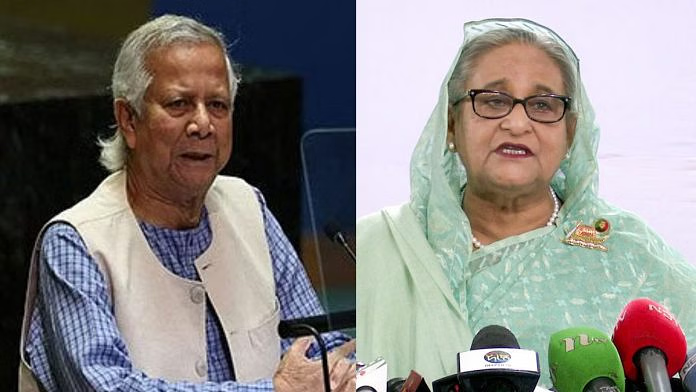
New Delhi/Dhaka, Feb 7 – Bangladesh’s interim government, led by Muhammad Yunus, has strongly condemned recent statements by ousted Prime Minister Sheikh Hasina, accusing her of inciting unrest. The government also urged India to ensure that its territory is not used for activities that could destabilize Bangladesh.
The diplomatic tensions escalated after Hasina, currently in exile in India, criticized the demolition of Dhanmondi 32, the historic residence of her father and Bangladesh’s founding leader, Sheikh Mujibur Rahman. The residence was destroyed by an angry mob earlier this week, drawing international condemnation.
Bangladesh Protests Against Hasina’s Statements
In response to Hasina’s remarks, Bangladesh’s Ministry of Foreign Affairs lodged a formal protest with New Delhi on Thursday. The ministry summoned India’s acting High Commissioner, Pawan Badhe, and handed over a protest note, accusing Hasina of spreading “false and fabricated statements” that could incite further political instability.
“We hope India will not allow its territory to be used for activities that create instability in Bangladesh. The government does not want such incidents to happen again,” the statement read.
The interim government also formally requested Hasina’s extradition, urging India to allow her return so she can face judicial proceedings. However, India’s Ministry of External Affairs (MEA) has not yet responded to this request.
Dhanmondi 32 Demolition Sparks Tensions
The destruction of Dhanmondi 32, once the residence of Sheikh Mujibur Rahman, has triggered widespread condemnation. Hasina, in a virtual address from India, accused the interim government of orchestrating the attack and attempting to erase history.
“They can demolish a building, but they cannot erase history. History has a way of taking its revenge,” Hasina said, further alleging that Bangladesh, once hailed for its economic growth, is now turning into a hub for militants and extremists.
The Bangladesh Awami League, Hasina’s party, blamed the interim government for failing to prevent the destruction, while international human rights organizations have expressed concerns over rising political tensions in the country.
India formally condemned the attack on the historic site, with MEA spokesperson Randhir Jaiswal calling it a regrettable act, stating, “The destruction of Sheikh Mujibur Rahman’s residence, a symbol of Bangladesh’s liberation struggle, should be strongly condemned by all who value democracy and historical preservation.”
India’s Diplomatic Balancing Act
Since Hasina fled Bangladesh on August 5, 2024, after widespread protests, her political activities from Indian soil have become a contentious issue. Dhaka has continued to push for her extradition, arguing that her speeches are fueling unrest in Bangladesh.
India’s response to this crisis remains a diplomatic challenge. Foreign Secretary Vikram Misri, during a recent visit to Dhaka, reaffirmed India’s commitment to a stable and democratic Bangladesh but avoided commenting on Hasina’s political activities in exile.
With growing tensions over the Dhanmondi 32 demolition and political unrest in Bangladesh, India faces a crucial diplomatic test. Whether New Delhi chooses to act on Dhaka’s requests or maintain its neutral stance will significantly impact future India-Bangladesh relations. For now, Hasina’s exile and continued political defiance remain a flashpoint in South Asian geopolitics.
***