Controversy Over ‘Beef Biryani’ Notice at AMU, University Calls It a Typing Error
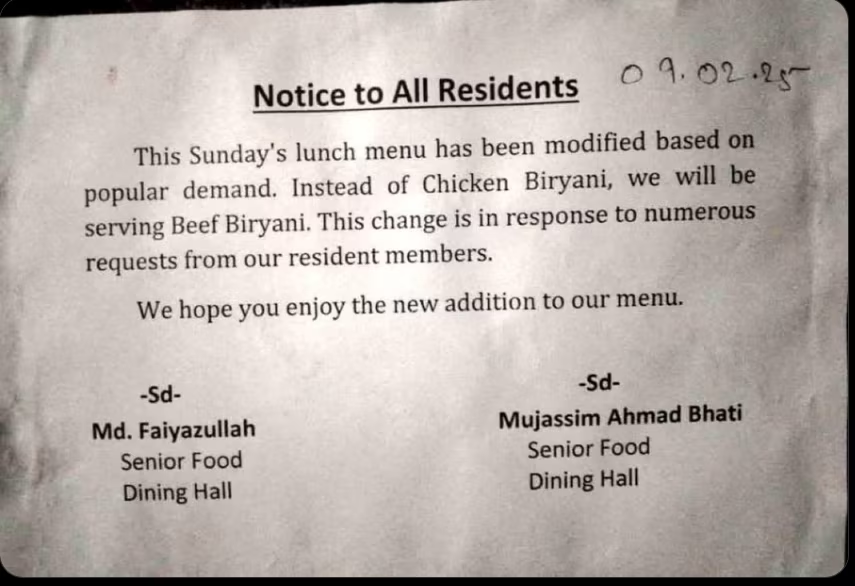
New Delhi, February 9, 2025: A major controversy erupted at Aligarh Muslim University (AMU) after a notice announcing ‘beef biryani’ on the lunch menu at Sir Shah Sulaiman Hall went viral on social media. The notice stated that beef biryani would replace chicken biryani “as per demand,” leading to strong reactions from students and the public.
The AMU administration quickly responded, calling it a “typing error” and withdrawing the notice. Officials also issued a show-cause notice to those responsible for the mistake. “The notice contained a typographical mistake and lacked official signatures, making it unauthentic. It was immediately retracted,” an AMU official stated.
University’s Response and Action
Initially, AMU did not comment on the matter, but as the controversy gained traction, the administration distanced itself from the notice. The provost of Sir Shah Sulaiman Hall issued show-cause notices to two senior students who were allegedly involved in circulating the document.
University officials reassured the public that they are committed to maintaining institutional rules and taking corrective steps. “We take this issue seriously and have implemented measures to prevent such incidents in the future,” an AMU spokesperson said.
Political Reactions and Allegations
The controversy soon turned political, with Bharatiya Janata Party (BJP) leader and AMU alumnus Nishit Sharma strongly criticizing the university’s handling of the situation.
“The administration’s actions are disgraceful,” Sharma said. “A notice was publicly displayed announcing beef biryani instead of chicken biryani. The responsibility lies with the senior food committee members. This either shows administrative negligence or an attempt to encourage radical elements.”
His remarks fueled further debate, with social media users expressing mixed opinions. Some accused AMU of negligence, while others suspected that the notice was deliberately circulated to create unrest.
Implications and Analysis
This incident highlights the sensitivity surrounding food choices in educational institutions, especially in a politically charged environment. While AMU’s quick response helped contain the issue, the case demonstrates how social media can amplify controversies.
Observers believe that AMU’s swift withdrawal of the notice and actions against those responsible were attempts to maintain neutrality. However, critics argue that such incidents allow political figures to exploit sensitive issues for their own agendas.
The AMU ‘beef biryani’ controversy shows how a minor administrative mistake can escalate into a major dispute. Though the university has taken corrective steps, the broader debate around food politics, institutional accountability, and social media’s role in spreading controversies remains unresolved. Moving forward, clear communication and stricter oversight will be necessary for educational institutions to prevent similar incidents.
***