Bangladesh’s Interim Government Accused of Selective Justice Amid Political Unrest
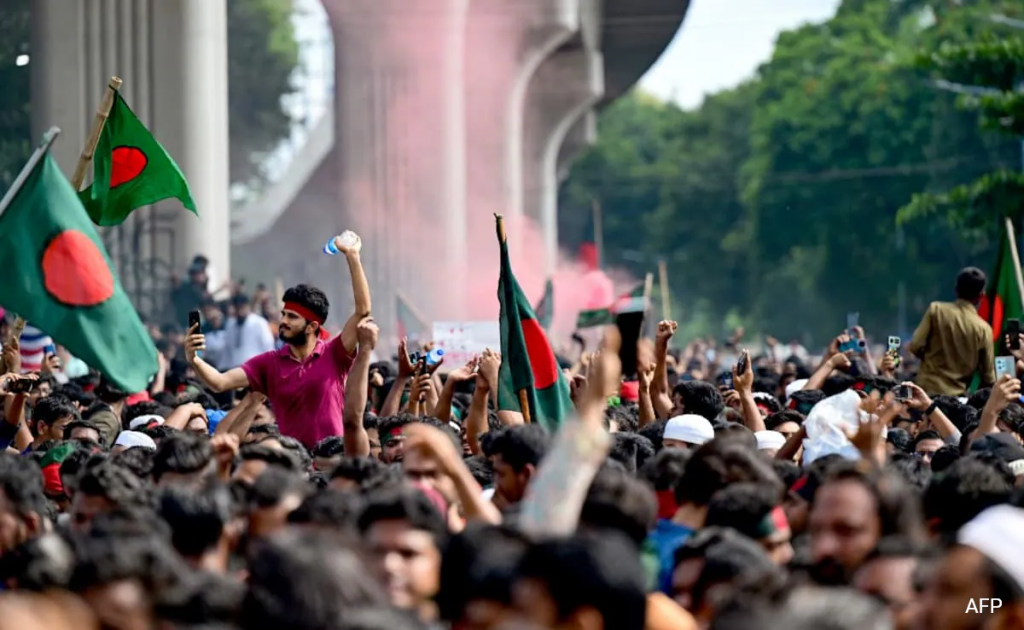
Dhaka, Bangladesh – The recent wave of violence in Bangladesh has sparked concerns over the interim government’s approach to law enforcement, with accusations of selective justice dominating political discourse. Since the February 5 attack on Dhanmondi 32, the historic residence of Sheikh Mujibur Rahman, protests, vandalism, and retaliatory violence have escalated across the country. However, the government’s uneven response—cracking down on those resisting violence while allowing others to act unchecked—has deepened tensions and raised questions about its true intentions.
Attack on Dhanmondi 32: A Symbolic Assault
The attack on Dhanmondi 32 was more than an act of vandalism; it was a symbolic attack on Bangladesh’s national history. The incident triggered outrage and clashes between different factions, leading to multiple injuries. However, instead of ensuring an impartial response, the government quickly labeled those defending properties from vandalism as “terrorists,” while failing to take decisive action against the actual perpetrators of the attacks.
Eyewitness reports suggest that anti-Awami League (AL) activists, students, and radical elements were involved in a series of targeted attacks on AL-affiliated properties. Despite this, law enforcement largely remained passive, only stepping in when clashes broke out between attackers and AL supporters. One such incident occurred on February 9 in Gazipur, where 14 people were injured, many of whom were reportedly defending homes and offices linked to the ruling party.
Operation Devil Hunt: Justice or Political Purge?
As tensions escalated, the government launched “Operation Devil Hunt” on February 10, an operation aimed at curbing unrest. However, the overwhelming focus on AL leaders and supporters has raised serious concerns about the government’s motivations.
Reports confirm that several high-ranking Awami League officials, including local presidents and secretaries, have been arrested. Even within the security forces, a Deputy Inspector General and three Superintendents of Police were detained. The move has sparked allegations that the operation is less about maintaining law and order and more about dismantling AL’s political infrastructure.
If the goal is to restore stability, why has the government not pursued those responsible for the February 5 attack and subsequent vandalism with equal urgency? Many attackers reportedly have links to the Bangladesh Nationalist Party (BNP), Jamaat-e-Islami, and radical elements—groups with a documented history of political violence. Yet, they have not faced the same level of scrutiny as AL leaders.
Shifting Blame: A Diplomatic Misstep
Instead of directly addressing the violence and lawlessness, the government has attempted to shift blame, even linking the unrest to Sheikh Hasina’s remarks in India. This narrative quickly collapsed after India’s Ministry of External Affairs (MEA) summoned the Bangladeshi envoy, clarifying that Hasina’s statements were personal and did not reflect India’s stance.
By attempting to divert attention externally, the interim government risks undermining its credibility rather than tackling the real issue—internal instability.
Escalating Violence, Uneven Response
Since February 7, at least 70 attacks across 35 districts have been reported, primarily targeting Awami League leaders, supporters, and properties. Yet, the government’s uneven approach—focusing its crackdown on one side while ignoring opposition-linked violence—has fueled accusations of bias and selective law enforcement.
The key question remains: if Sheikh Hasina’s administration was criticized for authoritarianism, does that justify allowing opposition forces to engage in unchecked violence? If the government’s priority is stability, why is there no equivalent operation against BNP and Jamaat-linked attackers actively destabilizing the country?
Bangladesh at a Crossroads
The interim government’s failure to apply justice impartially threatens to deepen political divisions and erode public confidence. A justice system that punishes one side while ignoring the other will not bring peace—it will exacerbate instability.
For Bangladesh to move forward, the government must uphold the rule of law impartially and ensure that all perpetrators of violence—regardless of political affiliation—are held accountable. Anything less risks jeopardizing the country’s stability, democratic integrity, and future.
***