India and China Begin Disengagement Process at Depsang and Demchok: A Step Toward Stability Along the LAC
In a landmark development, Indian and Chinese troops began the process of disengagement at the contentious regions of Depsang and Demchok in eastern Ladakh. This progress is part of a newly established Line of Actual Control (LAC) patrolling agreement, which seeks to restore peace and stability by resuming pre-2020 patrolling protocols. The agreement, signed early this week, marks a significant step in de-escalating tensions that have loomed large since the violent standoff in 2020.
The disengagement efforts were set in motion as small groups of soldiers began dismantling blockades and clearing tents that had been part of the military buildup. The withdrawal from Depsang and Demchok, previously areas of heightened military presence and disputed control, reflects efforts on both sides to move back to positions held before the conflict erupted in May 2020.
Sources indicate that the disengagement agreement was achieved through intense negotiation at both diplomatic and military levels, underscoring the high stakes and the complex nature of such border discussions. Foreign Secretary Vikram Misri’s announcement came as a relief, followed by a public acknowledgment from External Affairs Minister S. Jaishankar, who confirmed the mutual understanding reached on patrolling and the resumption of pre-2020 movements across the LAC. This formal disengagement was further affirmed by Prime Minister Narendra Modi and President Xi Jinping during the BRICS summit, where they mutually recognized the priority of maintaining peace along the shared border.
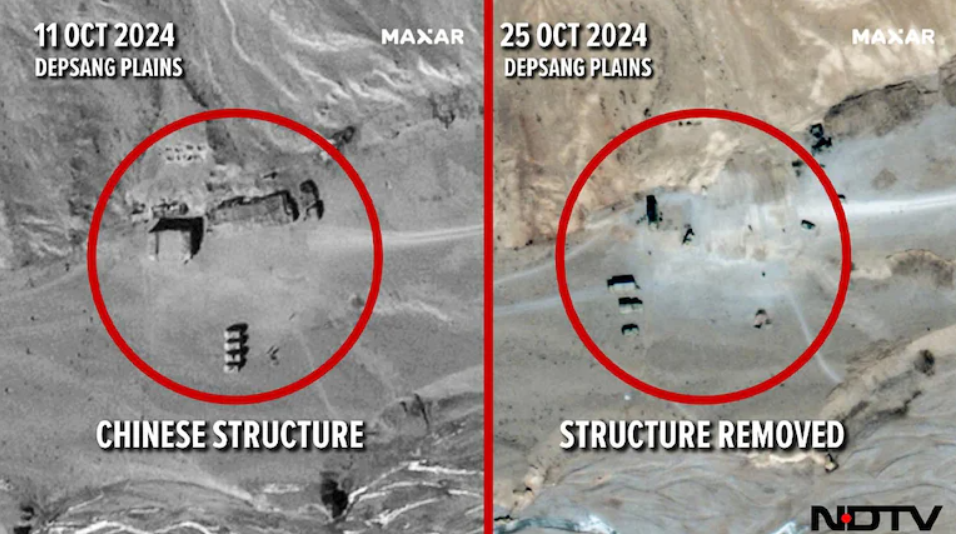
The disengagement is notably backed by satellite imagery. NDTV reported early images from Depsang and Demchok, showing tents and vehicles stationed at the Y-Junction in Depsang on October 11, followed by updated visuals showing clear, restored land as of October 13, indicating that structures had been dismantled. Similar images from Demchok showed that semi-permanent Chinese structures had been removed. Indian Army sources have stated that disengagement will be fully completed by October 29, with troops returning to pre-standoff positions.
In addition to the dismantling of military structures, both nations have agreed to a more systematic approach to patrolling, with two monthly patrols and a fixed strength of 15 personnel on each side to minimize the potential for clashes. There is an added provision that both Indian and Chinese forces will communicate in advance before patrolling, preventing misunderstandings or unintentional confrontations.
This disengagement process also allows local graziers to resume cattle grazing in previously restricted buffer zones under regulated and coordinated access. This provision, though small, is a meaningful step toward restoring normalcy in the lives of communities affected by the border standoff, whose livelihoods have been disrupted for over three years.
The scars of the 2020 Galwan clash, where 20 Indian soldiers lost their lives, remain a painful reminder of the human cost of such confrontations. In response, both governments have committed to sustained surveillance to prevent any future escalations and maintain transparency in the actions on either side of the LAC.
As Jaishankar noted, the agreement represents a “completion” of disengagement, yet its real test will come in the months and years that follow. With both governments now reaffirming the need for stability, the hope is that Depsang and Demchok will remain symbols of conflict resolution rather than contested ground.
This process is a measured yet hopeful step forward, underlining the need for consistent dialogue and mutual respect to ensure peace. In the remote, stark landscapes of Ladakh, where both soldiers and locals bear the brunt of geopolitics, such a move promises a glimpse of respite—a much-needed reprieve along the India-China border.
***