China’s Mega Dam a ‘Water Bomb,’ Warns Arunachal CM, Citing Risks to Millions in India and Bangladesh
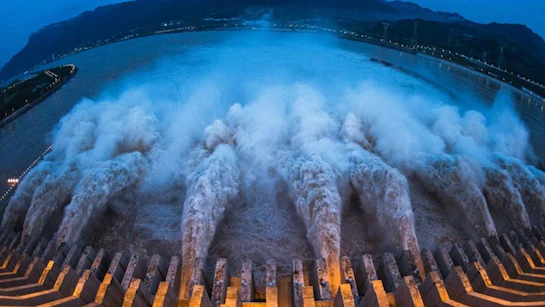
Itanagar, January 24, 2025 — Arunachal Pradesh Chief Minister Pema Khandu has raised serious concerns over China’s plan to construct the world’s largest hydropower project on the Yarlung Tsangpo River in Tibet. Speaking at a seminar on ‘Environment and Security’ in Itanagar, Khandu warned that the dam, with a projected capacity of 60,000 MW, poses significant threats to water security, ecology, and the livelihoods of millions downstream in India and Bangladesh.
Threat of Water Manipulation and Flooding
The Yarlung Tsangpo, known as the Siang in Arunachal Pradesh and the Brahmaputra as it flows through Assam and Bangladesh, is a vital water source. Khandu stressed that the proposed dam could allow China to control water flow, potentially creating drought conditions in the dry season and catastrophic floods during monsoons.
“During winter, the river could dry up, disrupting life in Arunachal and Assam,” Khandu stated. “Conversely, China could release excess water during monsoons, leading to devastating floods, displacing communities, and damaging crops and infrastructure.”
In addition, the dam could alter sediment flow, affecting agriculture in downstream areas reliant on nutrient-rich waters from the Brahmaputra.
Ecological and Economic Risks
The environmental consequences could be severe. The Brahmaputra sustains crucial ecosystems, and disruptions to its natural flow could devastate biodiversity, fisheries, and agriculture. The health of Tibet’s rivers affects over a billion people across South Asia, making this project a matter of regional concern.
Khandu also highlighted the economic implications, pointing out that many communities depend on the river for fishing, farming, and daily sustenance. Any significant change in water availability could lead to food insecurity and displacement.
China’s Lack of Transparency on Water Management
Another major concern is China’s reluctance to participate in international water-sharing treaties. Khandu accused Beijing of selectively sharing hydrological data, leaving India and Bangladesh vulnerable to unexpected water fluctuations. “Without cooperation, downstream nations have little warning about changes in river flow,” he noted.
India has responded by proposing the 12,500 MW Siang Upper Multipurpose Project (SUMP) in Arunachal Pradesh. The project aims to counterbalance China’s control over the river by securing India’s water resources. However, this plan has met resistance from local communities concerned about displacement and environmental damage.
Local Opposition to India’s Countermeasures
The SUMP project has triggered protests in Siang district, where indigenous communities fear losing their land and way of life. Demonstrations have been held against the government’s efforts to conduct feasibility studies, with locals arguing that the project could harm the environment and disrupt livelihoods.
China’s mega dam project on the Yarlung Tsangpo poses a grave threat to millions in India and Bangladesh. The risk of water manipulation, flooding, and ecological destruction has raised alarms among policymakers and environmentalists. As China remains outside global water-sharing frameworks, the need for diplomatic efforts and sustainable water management strategies has never been more pressing.
India’s response, including the proposed Siang Upper Multipurpose Project, will be crucial in safeguarding regional water security. However, balancing national security with local interests remains a challenge, making this issue a key test for India’s environmental and geopolitical strategy in the coming years.
***