India Protests China’s Creation of New Counties in Disputed Ladakh Region
India Lodges Strong Protest Against China Over New Administrative Divisions in Aksai Chin
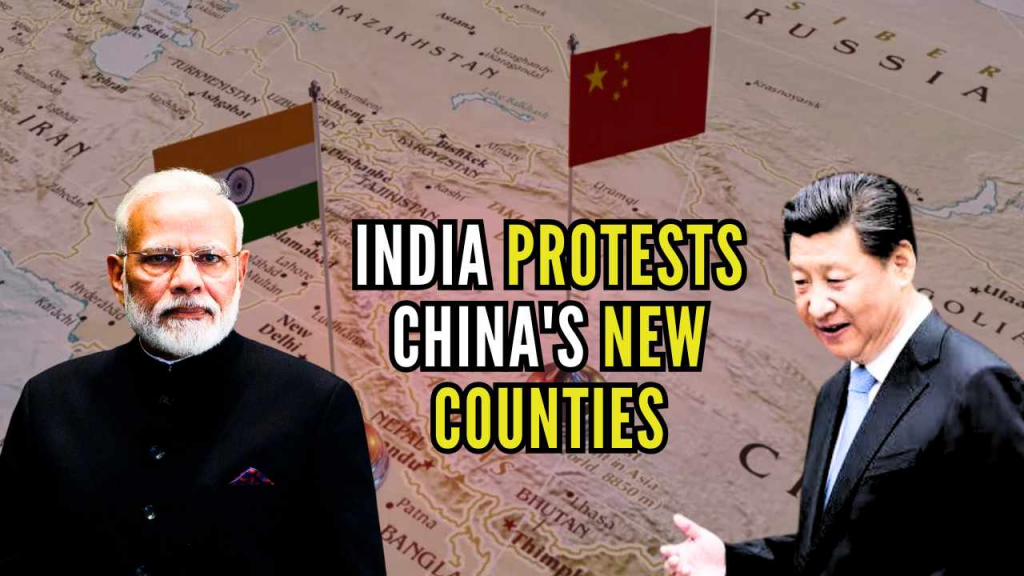
On January 3, 2025, India officially protested against China’s creation of two new administrative counties—He’an and Hekang—in the Hotan prefecture of Xinjiang. India claims that these new counties include parts of Aksai Chin, which it considers an integral part of its Union Territory of Ladakh. This development has reignited tensions between the two neighboring countries, just days after both sides held talks to ease border disputes.
India’s Firm Diplomatic Response
The Ministry of External Affairs (MEA) in India expressed strong opposition to China’s move, which was announced on December 27, 2024. MEA spokesperson Randhir Jaiswal stated, “We have never accepted the illegal Chinese occupation of Indian territory in this area. The creation of new counties will neither alter India’s sovereign claims nor lend legitimacy to China’s illegal and forcible occupation.”
India delivered a formal diplomatic note to the Chinese Embassy in New Delhi, clearly rejecting China’s inclusion of Aksai Chin into its new administrative divisions. The protest emphasized India’s unwavering stance on maintaining its territorial sovereignty.
Timeline of Recent Events
The announcement of He’an and Hekang counties was made public by China’s state-run Xinhua News Agency. This move came shortly after Indian National Security Adviser (NSA) Ajit Doval met with Chinese Foreign Minister Wang Yi in Beijing on December 18, 2024, to resume boundary negotiations. This meeting was the first of its kind in five years, following the deadly Galwan Valley clash in June 2020, where 20 Indian soldiers and four Chinese personnel lost their lives.
In October 2024, both countries had agreed to disengage military forces from sensitive areas along the Line of Actual Control (LAC). This agreement set the stage for a meeting between Indian Prime Minister Narendra Modi and Chinese President Xi Jinping during the BRICS summit held in Kazan, Russia. However, China’s latest actions have cast doubt on its commitment to peaceful negotiations.
Strategic and Historical Context
China’s move is seen as part of its broader strategy to assert control over disputed territories. Since the 1950s, China has occupied around 38,000 square kilometers of Aksai Chin. In 2023, China released official maps that included Aksai Chin and Arunachal Pradesh as parts of its territory. Moreover, China has renamed several locations along the LAC in Arunachal Pradesh, further escalating tensions.
Apart from territorial disputes, India is also concerned about China’s infrastructure projects along the Brahmaputra River, known as Yarlung Tsangpo in Tibet. The MEA has voiced its apprehensions regarding a massive hydropower dam proposed by China, stressing the importance of transparency to protect the interests of downstream countries like India and Bangladesh.
Implications and Conclusion
The establishment of He’an and Hekang counties threatens to undermine the diplomatic progress made through recent disengagement agreements and boundary talks. While India has responded diplomatically, the timing of China’s actions raises serious concerns about its intentions.
As both nations navigate this complex relationship, India remains firm in asserting its territorial claims and opposing unilateral actions by China. Moving forward, maintaining open communication channels and mutual respect will be essential to de-escalate tensions and work towards lasting peace in the region.
***