Neutral Expert Backs India’s Stand on Indus Waters Treaty Dispute
New Delhi, January 22, 2025: A neutral expert appointed by the World Bank has upheld India’s position in the ongoing dispute over the Kishenganga and Ratle hydroelectric projects under the Indus Waters Treaty (IWT). The decision, issued on January 20, 2025, validates India’s stance that the concerns raised by Pakistan fall within the jurisdiction of the neutral expert. This ruling marks a significant diplomatic victory for New Delhi.
Neutral Expert’s Ruling
The neutral expert, Michel Lino, President of the International Commission on Large Dams, ruled that he is competent to address the “Points of Difference” raised by Pakistan. This decision allows the expert to proceed to the merits phase, where the technical aspects of Pakistan’s objections will be examined in detail.
In a statement, India’s Ministry of External Affairs (MEA) welcomed the ruling, stating, “The decision upholds and vindicates India’s stand that all seven questions referred to the neutral expert fall within his competence under the treaty.” India has consistently maintained that the neutral expert is the only valid authority to resolve such differences.
Timeline of the Dispute
The Kishenganga and Ratle hydroelectric projects in Jammu and Kashmir have been a source of contention since 2015. Initially, Pakistan sought the appointment of a neutral expert to address its technical concerns. However, in 2016, Islamabad unilaterally withdrew its request and instead sought arbitration from the Permanent Court of Arbitration (CoA) in The Hague.
India opposed this move, citing Article IX of the treaty, which outlines a graded mechanism for dispute resolution. According to India, the treaty does not permit parallel proceedings under both the CoA and the neutral expert. As a result, India participated in the neutral expert process but boycotted the CoA proceedings, calling them “illegally constituted.”
In August 2024, India formally notified Pakistan of its intent to review and modify the 62-year-old treaty under Article XII (3), citing Pakistan’s rigid approach to dispute resolution.
The Significance of the Indus Waters Treaty
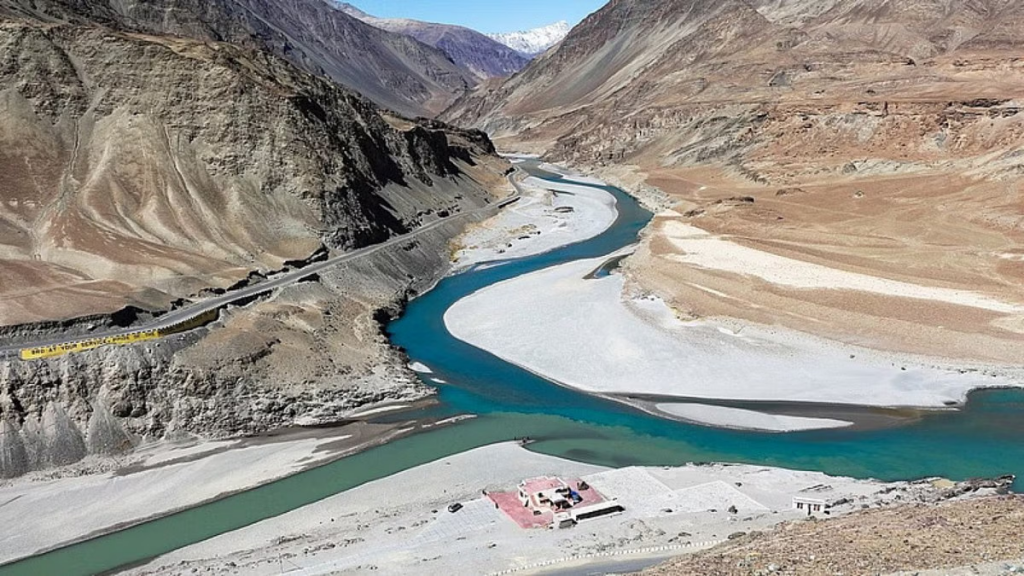
The Indus Waters Treaty, signed in 1960, is regarded as one of the most successful water-sharing agreements in history. It was brokered by the World Bank and allocates control of the eastern rivers—Ravi, Beas, and Sutlej—to India, while granting Pakistan rights over the western rivers—Indus, Jhelum, and Chenab. The treaty allows limited use of each other’s rivers for specific purposes, including hydroelectric projects.
Pakistan has long claimed that the Kishenganga and Ratle projects violate treaty provisions, while India maintains that they fully comply with the treaty’s guidelines.
Implications of the Decision
The neutral expert’s ruling is seen as a diplomatic boost for India, reinforcing its adherence to the treaty’s established dispute resolution mechanism. Experts argue that the decision also highlights Pakistan’s procedural missteps in bypassing the neutral expert process in favor of arbitration.
“The ruling aligns with the treaty’s graded mechanism for resolving disputes, which Pakistan violated by simultaneously approaching the Court of Arbitration,” said an official familiar with the matter.
With the process now moving to the technical evaluation phase, India’s position is expected to be further strengthened.
This ruling underscores the importance of following the Indus Waters Treaty’s framework for dispute resolution. India’s commitment to upholding the treaty while advancing its hydroelectric projects reflects a balanced and principled approach. As the neutral expert proceeds with the next phase, this decision sets a strong precedent for resolving future disputes in a fair and structured manner.
***