China Objects to Bangladesh’s Maps and Textbooks, Raising Geopolitical Concerns
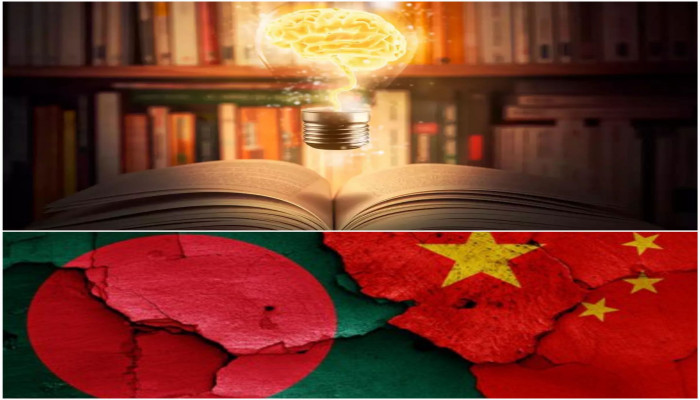
Dhaka/New Delhi, February 11, 2025 – China has formally objected to how Bangladesh’s school textbooks and official maps depict certain territories. The main concerns are the inclusion of Arunachal Pradesh and Aksai Chin as Indian territories and the classification of Hong Kong and Taiwan as independent entities. This move has raised questions about China’s geopolitical strategy in the region.
China’s Concerns Over Bangladesh’s Maps and Books
According to reports from Bangladeshi newspaper Prothom Alo, China sent an official letter to the Bangladesh government in November 2024. Beijing asked Dhaka to correct what it called “factual inaccuracies” in school textbooks and on the Bangladesh Land Survey Department website. The objections focused on:
- A fourth-grade madrasa textbook that allegedly misrepresents the India-China border, particularly in Arunachal Pradesh (which China calls “Zangnan”) and Aksai Chin.
- A ninth and tenth-grade textbook that lists Hong Kong and Taiwan as independent countries.
- The official map on the Bangladesh Land Survey Department’s website, which shows Arunachal Pradesh and Aksai Chin as part of India and Taiwan as a separate country.
Bangladesh’s Response
The Bangladeshi government responded carefully. The Ministry of Foreign Affairs consulted with the Ministry of Education and the National Curriculum and Textbook Board (NCTB). However, they concluded that immediate changes were not possible because the textbooks had already been printed. Dhaka assured China that the issue would be reviewed in the future.
For now, China has not escalated the issue but has made it clear that it expects Bangladesh to make corrections in due course.
Why is China Raising This Issue Now?
Many analysts believe China’s objections go beyond textbook corrections and are part of a larger geopolitical strategy. Possible reasons include:
- Changing Political Climate in Bangladesh – After the student-led uprising on August 5, 2024, and other political shifts, China might be testing the government’s response to external pressure.
- India-Bangladesh Tensions – Recent disagreements between India and Bangladesh over trade and border security could allow China to strengthen its ties with Dhaka.
- China’s Larger Territorial Goals – China has been actively pushing its territorial claims across Asia, including in the Indo-Pacific, the South China Sea, and the Himalayan border with India.
Bangladesh’s Delicate Balancing Act
Bangladesh has historically maintained good relations with both India and China. While India is its closest neighbor and security partner, China is its biggest investor and trading ally. Bangladesh follows internationally recognized borders in its maps and textbooks, which is why it has not faced such objections before.
Some former Bangladeshi diplomats believe China’s move is an attempt to push Bangladesh to accept its territorial claims more explicitly. While Bangladesh supports the “One China” policy in diplomacy, it has never officially endorsed Beijing’s stance on Arunachal Pradesh or Taiwan.
For now, Dhaka is handling the matter diplomatically—acknowledging China’s concerns but not making any immediate changes. However, if China increases its pressure, Bangladesh may have to make tough decisions that could impact its foreign relations.
The Bigger Picture: China’s Expanding Influence in South Asia
China’s dispute over maps is part of a broader strategy to influence South Asian countries. If Bangladesh agrees to revise its textbooks and maps, it could set a precedent for other nations like Nepal, Sri Lanka, and Myanmar.
India is closely watching the situation. Any shift in Bangladesh’s stance on territorial issues could impact India-Bangladesh-China relations. As part of its “Neighborhood First” policy, India wants to prevent China from gaining more influence in Dhaka.
A Test for Bangladesh’s Foreign Policy
China’s objections to Bangladesh’s maps and textbooks are not just about geographical accuracy. They test how Bangladesh manages its foreign policy amid growing regional competition.
For now, Bangladesh remains neutral, neither accepting nor rejecting China’s demands. However, its final decision could shape its geopolitical direction for years to come. If it resists, it will show its commitment to independent policymaking. If it makes changes, even partially, it could signal a shift in South Asian power dynamics.
As geopolitical tensions rise, this dispute highlights a new reality: maps are no longer just drawings on paper—they are key tools in global power struggles.
***