India Protests China’s Road Construction in Disputed Shaksgam Valley
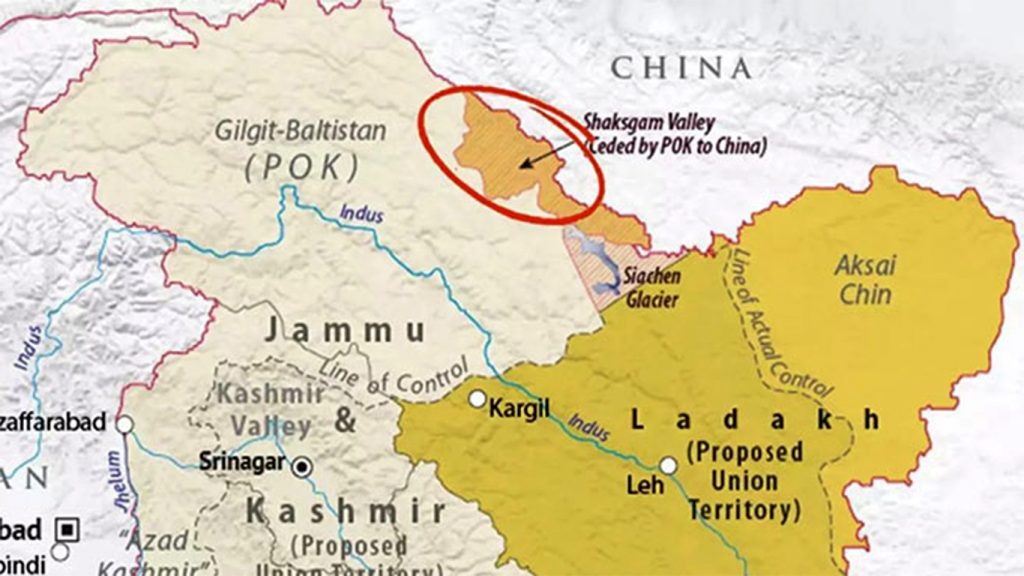
India has strongly objected to China’s recent road construction in the Shaksgam Valley, a region India claims as its own but was ceded to China by Pakistan in 1963. The 5,180 square-kilometre territory, which India asserts was illegally transferred, poses a strategic threat to Indian defenses in the Siachen Glacier area, according to reports from Hindustan Times and other sources on May 3.
The protest was lodged with Chinese authorities in both New Delhi and Beijing. The road is believed to be part of an alignment linking the Karakoram Highway to the Upper Shaksgam Valley, which borders the Siachen Glacier.
India’s Ministry of External Affairs (MEA) reiterated its stance that the 1963 China-Pakistan Boundary Agreement, which Pakistan used to cede the area to China, is illegitimate and India has consistently communicated its rejection of this agreement. MEA spokesperson Randhir Jaiswal stated on May 2, “We have registered our protest with the Chinese side against illegal attempts to alter facts on the ground. We further reserve the right to take necessary measures to safeguard our interests.”
India contends that Pakistan illegally transferred 5,180 sq km of Indian territory in Shaksgam Valley under the 1963 agreement and that China has occupied approximately 38,000 sq km of Indian territory in Ladakh for six decades.
The newly constructed road crosses the 16,333-feet-high Aghil Pass and may provide an alternate route to the Karakoram Pass via Upper Shaksgam, extending to the Khunjerab Pass in Pakistan-Occupied Jammu and Kashmir. Hindustan Times noted that the potential extension of this road to the Upper Shaksgam Valley could expose Indian positions on the Siachen Glacier to threats from both Pakistan and China, necessitating long-term defense planning by the Indian Army.
Although the current road construction is a patchwork between two possible alignments, it is apparent that China aims to connect the Lower and Upper Shaksgam Valleys with roads and military outposts, exerting pressure on Indian positions on the Siachen Glacier and Saltoro Ridge.
India has raised the Shaksgam Valley issue in the Special Representative Dialogue on Boundary Resolution, the latest of which occurred in December 2019. However, this dialogue has stalled following Chinese transgressions in East Ladakh in May 2020. India remains firm in its refusal to let China unilaterally impose the 1959 line on East Ladakh.
By lodging multiple protests over the past two years regarding road construction in the Shaksgam Valley, India has made it clear that it will defend its territorial claims and seek to halt construction activities in the disputed region.
***