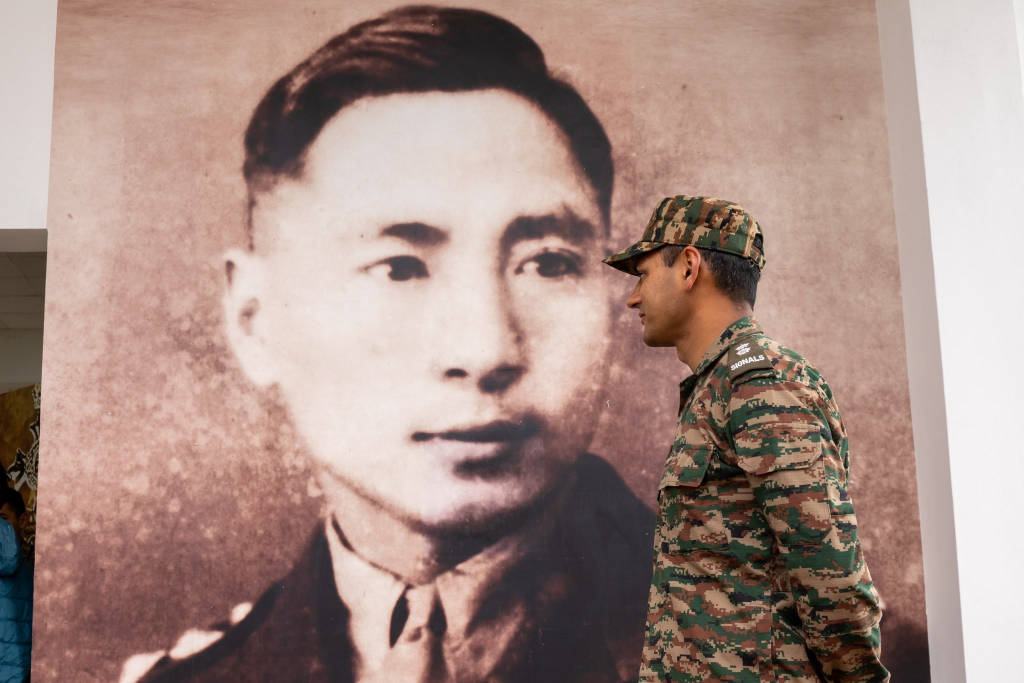
Museum Honours Major Ralengnao Bob Khathing, Architect of Tawang’s Integration into India
Tawang, Arunachal Pradesh – Nov 3, 2024
In a tribute to an unsung hero of India’s history, the “Major Ralengnao Bob Khathing Museum of Valour” was inaugurated on October 31 in Tawang, commemorating the audacious operation led by Major Ralengnao Bob Khathing in 1951 to integrate Tawang into the Indian Union.
The museum, which celebrates the life and contributions of the Manipuri Naga officer, was virtually inaugurated by Defence Minister Rajnath Singh from Tezpur, Assam, as adverse weather prevented his travel to Tawang. The event was attended by a host of dignitaries, including Arunachal Pradesh Chief Minister Pema Khandu, Manipur Chief Minister N Biren Singh, Union Minister Kiren Rijiju, and members of Khathing’s family.
The Audacious Operation of 1951
Major Khathing’s operation came at a pivotal time when India’s hold on Tawang was fragile. After the 1914 Simla Convention placed the region under British India’s rule, Tawang remained under the administrative control of an independent Tibetan government. By 1951, China had annexed Tibet, heightening tensions over border territories.
On January 17, 1951, Major Khathing, then an assistant political officer in the North East Frontier Agency (NEFA, now Arunachal Pradesh), was directed by Assam Governor Jairamdas Daulatram to march towards Tawang. Accompanied by 200 Assam Rifles soldiers and 400 porters, Khathing reached the region and peacefully integrated it into India.
Khathing found the local Monpa community burdened by harsh taxes imposed by the Tibetan administration. Addressing their grievances, he assured them that democratic India would never impose unjustified taxes. The Indian Tricolour was soon hoisted in Tawang and Bumla, marking the region’s formal integration into India.
Remembering Major Khathing’s Legacy
Defence Minister Rajnath Singh hailed Khathing’s contributions during the inauguration, stating, “Major Khathing not only led the peaceful integration of Tawang into India but also laid the foundation for key security frameworks, including the Sashastra Seema Bal, Nagaland Armed Police, and the Naga Regiment.”
Chief Minister Pema Khandu described the museum as a tribute to Khathing’s bravery and sacrifice, calling him a true son of ‘Maa Bharati’ (Mother India). He highlighted how Khathing’s efforts secured Tawang and established Indian administration in the remote region, fulfilling the vision of India’s first Home Minister, Sardar Vallabhbhai Patel.
Union Minister Kiren Rijiju reflected on Khathing’s multifaceted career, which included roles as a student leader, Army major, civil servant, legislator, minister in Manipur, and India’s ambassador to Myanmar.
A Museum of History and Culture
The museum not only honours Khathing’s legacy but also celebrates the rich cultural heritage of the local Monpa community. Exhibits include artifacts, photographs, and narratives detailing Tawang’s history, including compelling accounts of the 1962 India-China war.
A Legacy for Future Generations
The inauguration of the museum underscores the importance of remembering the lesser-known heroes who shaped India’s borders and history. As Tawang stands as a testament to Khathing’s vision and courage, the museum serves as a reminder of the enduring spirit of those who dedicated their lives to the nation.
***