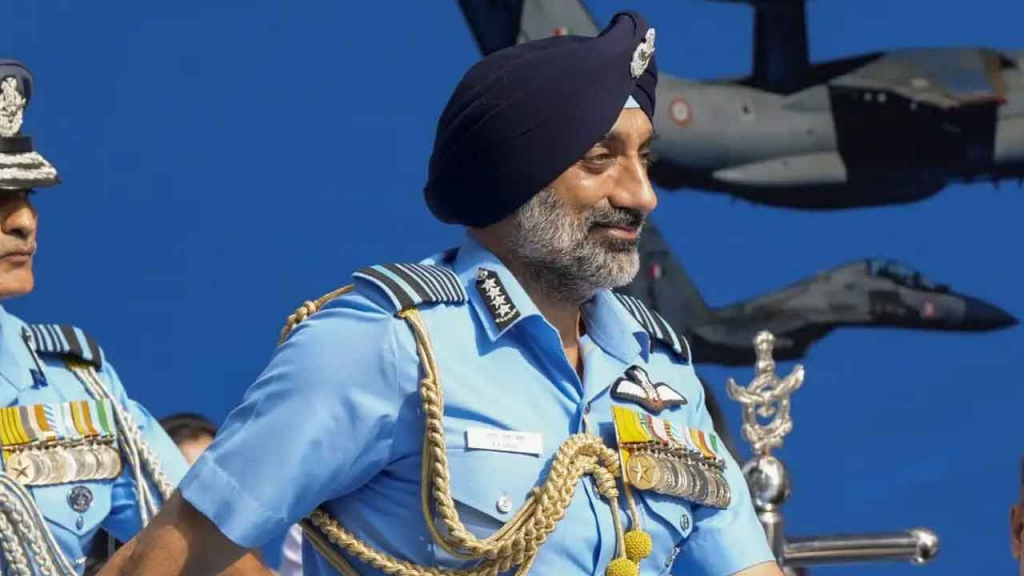
IAF Chief Raises Alarm Over Delays in Fighter Jet Production
Indian Air Force Chief Warns of Defence Gaps Amid China’s Rapid Military Growth
Indian Air Force (IAF) Chief Air Chief Marshal A.P. Singh has voiced serious concerns over delays in India’s indigenous fighter jet projects. Speaking at the 21st Subroto Mukherjee Seminar in New Delhi, he highlighted how these setbacks could weaken national security, especially as China continues to advance rapidly in military technology.
China’s Military Growth Leaves the World Stunned
China recently showcased two sixth-generation stealth fighter jets during test flights in Chengdu on December 26. These tailless, advanced aircraft have caught global attention, even from the United States, which is still working on its own sixth-generation fighters. This comes after China’s deployment of fifth-generation Chengdu J-20 jets near the Indian border, highlighting its growing military strength.
“China is investing heavily in its air force,” Singh said. “Their new stealth aircraft highlights how fast they’re progressing, widening the technological gap.”
India’s Struggles with Indigenous Jet Production
India’s Tejas Mark-1A fighter jet program has faced long delays. Despite ordering 40 aircraft over a decade ago, deliveries are still pending. The IAF currently operates 30 fighter squadrons, far below the required 42.5 to ensure national security.
“The first Tejas jet flew in 2001, and induction started in 2016. Yet in 2024, we still haven’t received the full order of 40 aircraft,” Singh said. “Technology delayed is technology denied.”
Supply chain issues, like delays in getting GE-F404 turbofan engines from the United States, have worsened the situation. The Advanced Medium Combat Aircraft (AMCA) program, India’s plan to develop a fifth-generation fighter jet, is also behind schedule. Though approved in 2022 with a budget of over ₹15,000 crore, its first prototype is expected only by 2028, with full induction likely after 2035.
Private Sector’s Role in Defence Production
To speed up defence manufacturing, Singh emphasized involving the private sector. “We need competition and multiple sources to ensure efficiency,” he said. The IAF has already partnered with micro, small, and medium enterprises (MSMEs) to produce around 50,000 components for its Base Repair Depots. Additionally, programs like iDEX (Innovations for Defence Excellence) and Mehar Baba-I are encouraging defence innovation.
The Cost of Self-Reliance
Singh acknowledged that self-reliance in defence, or “Atmanirbharta,” comes with higher costs. “We may have to spend more and accept risks in research and development, but it will give us the strategic independence we need,” he explained.
Air Chief Marshal Singh’s remarks highlight the urgent need for India to bridge the gap between its defence goals and current capabilities. As China races ahead with military advancements, India must focus on timely innovation, private sector involvement, and reducing dependence on imports to secure its strategic autonomy.
***