Clash Over Indigenous Artwork Removal Leaves 13 Injured in Bangladesh
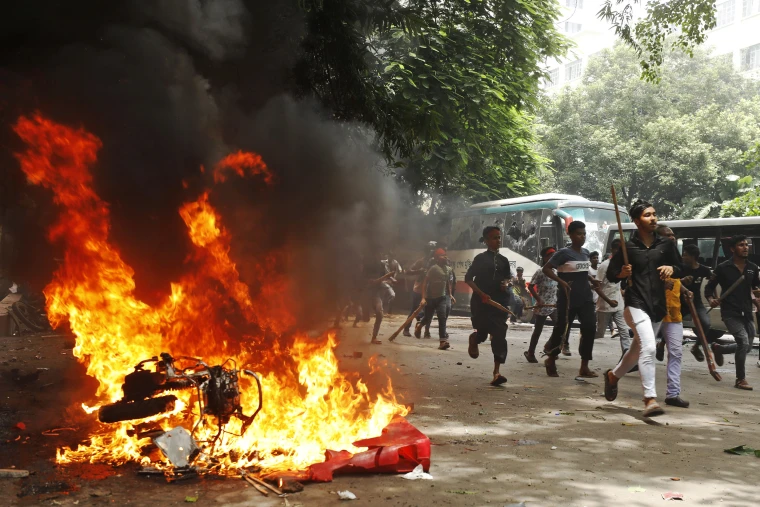
Dhaka, Bangladesh – January 12, 2025: A violent clash outside the National Curriculum and Textbook Board (NCTB) office in Dhaka has left at least 13 people injured, as extremist groups opposed to indigenous-themed artwork in school textbooks attacked protesting students and rights activists. The incident has sparked nationwide outrage and demands for justice.
The protest was organized by Aggrieved Indigenous Students, who were rallying against the removal of an illustration from the ninth and tenth-grade Bengali grammar textbook. The artwork depicted a tree with five leaves labeled “Muslim,” “Hindu,” “Christian,” “Buddhist,” and “Indigenous,” with the message “Leaf-tearing prohibited.” The image was removed following demands from certain Islamic student groups, who argued that it undermined national unity and sovereignty. NCTB deleted the artwork from the textbook’s online version on January 12, prompting immediate backlash from indigenous groups.
Around 1:00 PM, as indigenous students and rights activists marched from Dhaka University’s Raju Memorial Sculpture towards the NCTB office, they encountered a counter-protest by an extremist group, Students for Sovereignty. Despite police presence, tensions escalated, leading to a violent altercation.
Eyewitnesses reported that members of the extremist group, armed with sticks and rods, attacked the indigenous protesters. Among the 13 injured were student leaders and activists, including Ananta Dhamai, Tony Chiran, Reng Young Mro, Isaba Suhrat, Rupaiya Srestha Tanchaongya, and journalist Jewel Marak. Two individuals sustained serious injuries and were admitted to Dhaka Medical College Hospital. Following the attack, the assailants reportedly occupied the NCTB premises, forcing indigenous protesters to retreat to the Daily Bangla intersection.
The incident has drawn widespread condemnation from rights organizations. The New Delhi-based Rights and Risks Analysis Group (RRAG) denounced the violence, calling it a premeditated assault by members of the Islamic Chhatra Shibir, affiliated with Jamaat-e-Islami. RRAG Deputy Director Tejang Chakma criticized the government’s failure to protect peaceful demonstrators, stating, “Adivasi students cannot even protest in the capital without facing attacks. We will raise this issue with the United Nations and the diplomatic community.”
The leader of the extremist group, Mohammed Abu Sadiq Qayem, along with other members, has been accused of orchestrating the violence. Their stance aligns with arguments frequently made by settler groups in the Chittagong Hill Tracts (CHT), who believe that recognizing indigenous identities could fuel demands for autonomy, challenging state sovereignty.
Indigenous leaders insist that the removed artwork symbolized inclusivity and equality, and its removal marginalizes their cultural identity. Speaking to reporters, Alik Mree, leader of Aggrieved Indigenous Students, stated, “The NCTB has bowed to extremist pressure. We demand justice for the attack and the reinstatement of the artwork.”
In response to the violence, indigenous groups have announced a series of nationwide protests. Demonstrations are scheduled for January 16, followed by a planned siege of the Chief Advisor’s residence on January 17.
The attack underscores ongoing tensions regarding indigenous identity and national unity in Bangladesh. While indigenous groups push for recognition and inclusivity, extremist factions view such acknowledgment as a threat to sovereignty. The government now faces mounting pressure to address minority rights and ensure protection for peaceful protesters.
***