Bangladesh Government Rejects Bailout for Beximco, Sparking Worker Protests
Dhaka, January 24, 2025: Bangladesh’s interim government has declined a bailout request for Beximco, the country’s largest conglomerate, leaving over 40,000 garment workers at risk of unemployment. Citing $4.1 billion in unpaid loans and a lack of cooperation from the company’s management, the government dismissed calls to nationalize the factories, sparking protests from affected workers.
Beximco Crisis and Government Decision
Beximco, a key player in Bangladesh’s garment sector, operates multiple factories critical to the country’s economy. The company has been struggling since the ousting of former Prime Minister Sheikh Hasina in August 2024, with co-founder Salman F. Rahman—one of Hasina’s closest allies—being detained and the company’s bank accounts frozen.
On January 24, Labor Minister Sakhawat Hossain announced that the government could not step in to save the company. “We have no other option but to fully shut down the factories as the government cannot manage them,” Hossain stated, ruling out the possibility of nationalization.
Commerce Minister Sheikh Bashir Uddin echoed this stance, explaining that while the government recognized the sector’s importance, discussions with Beximco’s management failed to yield a workable solution. “Despite the substantial defaulted loans, we approached the issue with compassion. Unfortunately, the necessary cooperation from the owners was lacking,” Uddin said.
Reports indicate that Beximco sought a $33 million bridging loan to sustain operations, but the government declined the request, reinforcing its commitment to financial prudence.
Worker Protests and Economic Fallout
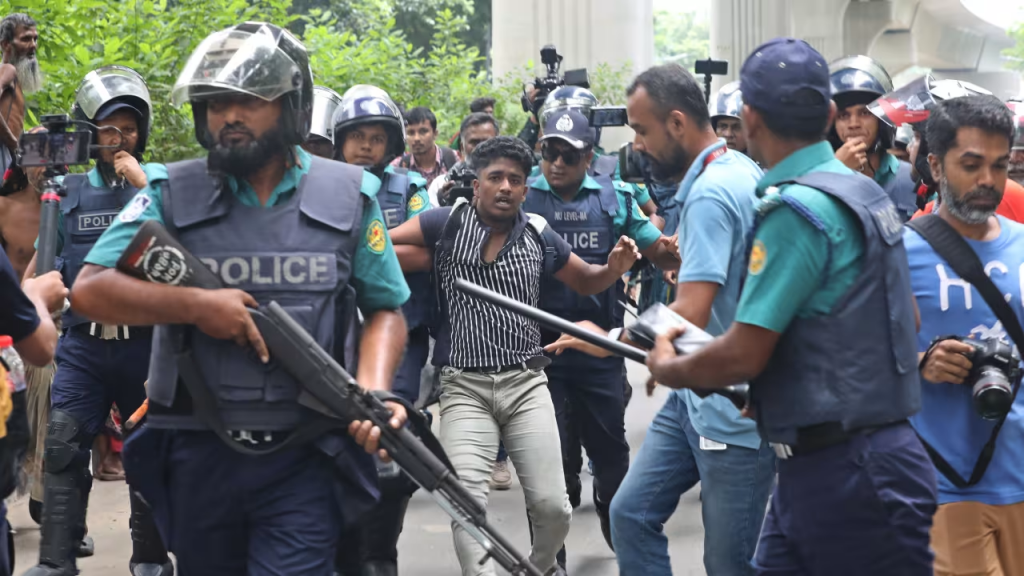
The government’s decision has led to widespread unrest among Beximco’s workers, who have staged protests demanding intervention. Demonstrations intensified on January 22, with some protesters vandalizing vehicles in frustration over their uncertain future.
Despite these tensions, the government has assured that workers will receive salaries for December 2024 and other benefits. However, Hossain warned that “those involved in vandalism will face consequences.”
Abdul Qaiyum, a senior officer at Beximco Industrial Park, criticized the government’s handling of the crisis. “We need some loans to survive,” he told AFP, highlighting the severe financial constraints caused by frozen accounts.
Economic and Political Implications
The crisis underscores the challenges facing Bangladesh’s interim government as it navigates a post-Hasina economic landscape. The garment industry, which accounts for 80% of Bangladesh’s export revenue, is crucial to the country’s economic stability. While the government’s decision signals a tough stance against financial mismanagement, experts warn it could undermine investor confidence and worker trust.
Critics argue that the refusal to intervene may have long-term repercussions on the nation’s garment sector, potentially affecting foreign investment and economic growth. On the other hand, financial analysts caution that bailing out Beximco could set a precedent for corporate bailouts, straining public finances.
The government’s refusal to rescue Beximco marks a significant economic and political decision, balancing financial responsibility with the urgent need to support thousands of affected workers. As Bangladesh moves forward, the administration faces the challenge of addressing worker grievances while maintaining fiscal discipline to ensure economic stability.
***