President’s Rule Imposed in Manipur Amid Political Deadlock and Ethnic Unrest
New Delhi, February 13, 2025 – The Union government has imposed President’s Rule in Manipur following the resignation of Chief Minister N. Biren Singh. The decision, aimed at addressing prolonged ethnic violence and political instability in the northeastern state, underscores the broader regional implications for India and its neighbors.
Central Authority Takes Control
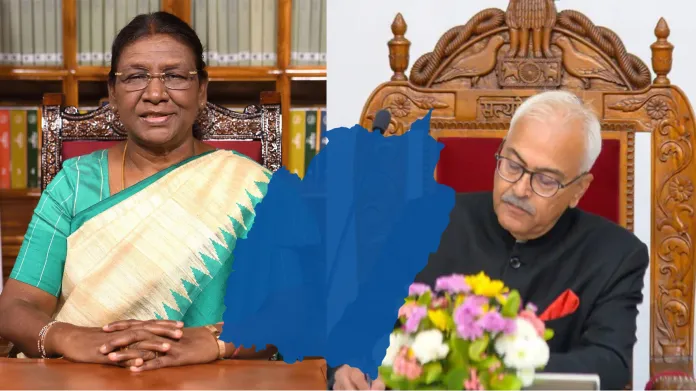
President Droupadi Murmu invoked Article 356 of the Indian Constitution after reviewing a report submitted by Manipur Governor Ajay Kumar Bhalla. The Ministry of Home Affairs (MHA) issued an official notification stating:
“After considering the report and other relevant information, I am satisfied that a situation has arisen in which the Government of that State cannot be carried on in accordance with the provisions of the Constitution.”
Under President’s Rule, all executive powers of the Manipur government are now transferred to the President, with administrative decisions under the Governor’s purview. The state assembly has been placed under suspended animation rather than being dissolved. This marks the 11th time President’s Rule has been imposed in Manipur since 1951, the last instance occurring in 2001 and lasting 277 days.
Political Crisis and Leadership Vacuum
The imposition of President’s Rule follows the resignation of Chief Minister Biren Singh on February 9, a day before the scheduled budget session of the state assembly. His resignation came amid mounting public pressure, ethnic strife, and a Supreme Court-monitored investigation into leaked audio tapes purportedly implicating him in inciting violence.
Despite repeated efforts, the Bharatiya Janata Party (BJP) failed to reach a consensus on Singh’s successor. Senior party leaders, including BJP’s Northeast coordinator Sambit Patra, engaged in multiple discussions, but internal factionalism prevented a resolution. The delay in forming a government raised constitutional concerns, as Article 174(1) mandates that a state assembly must reconvene within six months of its last session, which in Manipur’s case was last adjourned on August 12, 2024.
Ethnic Unrest and Its Impact
Manipur has been in turmoil since May 2023, when ethnic clashes between the Meitei and Kuki-Zo communities escalated into large-scale violence. More than 250 people have died, and approximately 60,000 have been displaced. The conflict, fueled by historical grievances, political maneuvering, and concerns over demographic shifts due to illegal immigration, has significantly destabilized the region.
Biren Singh’s administration faced criticism for its failure to control the violence, with opposition parties, including Congress, repeatedly demanding his removal. In December 2024, Singh issued a public apology, acknowledging administrative shortcomings and calling for reconciliation. However, continued unrest and allegations of mishandling the crisis left his leadership untenable.
Political Repercussions and Regional Implications
The imposition of President’s Rule has drawn sharp reactions from political leaders. Congress leader Rahul Gandhi accused the BJP-led central government of neglecting Manipur’s crisis, stating:
“This is a delayed admission of governance failure.”
Congress general secretary Jairam Ramesh echoed similar sentiments, citing the Supreme Court’s observation of an “absolute breakdown of constitutional machinery.”
For India, the situation in Manipur carries broader geopolitical consequences. The state shares a 398-km porous border with Myanmar, raising concerns over illegal immigration and cross-border insurgency. The region’s instability also affects trade and connectivity projects under India’s Act East Policy, aimed at strengthening ties with Southeast Asia. Neighboring countries, particularly Myanmar and Bangladesh, are closely monitoring developments in Manipur given their own internal security challenges.
Path Forward
With President’s Rule now in place, the central administration’s immediate priority is to restore stability and address security concerns. While the Governor will oversee governance, long-term peace hinges on political consensus and reconciliation among ethnic communities. The BJP faces the challenge of appointing a new leader capable of navigating the complex social and political landscape while maintaining party unity.
The coming weeks will be crucial in determining whether Manipur moves towards political resolution or deeper instability. For now, the imposition of central rule marks a turning point in the state’s turbulent history, with significant implications for India’s internal security and regional diplomacy.
***